
Overview The syllabus at a glance
Ten parts, one lotus
In one line
The syllabus has two halves, theory and practical. These notes sort it into ten parts, one page each: what yoga is, then what you practise, then the body, teaching, food and wellness.
The Yoga Certification Board was set up by the Ministry of Ayush to certify yoga professionals at several levels, among them Yoga Protocol Instructor, Yoga Wellness Instructor, Yoga Teacher and Evaluator, and Yoga Master. Source Its syllabi have a theory part and a practical part. In its Yoga Wellness Instructor syllabus, for example, the practical carries 140 of the 200 marks: demonstrating, teaching and applying what you know. Source The syllabus I am studying follows the same pattern, with its own numbering.
How to read the codes. A plain number such as 1.12 is a theory item, and its first digit is its syllabus unit: Unit 1, Foundation of Yoga (1.1–1.18); Unit 2, Yoga and Health (2.1–2.6); Unit 3, Applied Yoga (3.1–3.5); Unit 4, Teaching Skills (4.1–4.7). Nutrition and wellness are topics without numbers. A code starting with P, such as P1.3, is a practical item. The syllabus units are long, so these notes split them into ten parts, one page each. Every section on those pages opens with its code, so you can find any item quickly, and each page ends with a quick revision quiz and its sources.
Animation · the syllabus lotus
Ten petals, ten parts
- Yoga, theory and practice · parts 1–6
- The body · 7
- Teaching · 8
- Food and wellness · 9–10
Part 1 · 1.1–1.7
Foundations of yoga
- Definitions from the Yoga Sūtra, the Gītā and the Kaṭha Upaniṣad
- History, the Upaniṣads, Jaina and Bauddha yoga
- Darśana, the six schools, sādhaka and bādhaka
Ten petals, ten parts. Hover, focus or tap a petal to light it; click it, tap it again or press Enter to open its page.
-

Part 1 · 1.1–1.7
Foundations of yoga
What the word yoga means, how yoga grew, and how Indian philosophy frames it.
- Definitions from the Yoga Sūtra, the Gītā and the Kaṭha Upaniṣad
- History, the Upaniṣads, Jaina and Bauddha yoga
- Darśana, the six schools, sādhaka and bādhaka
-
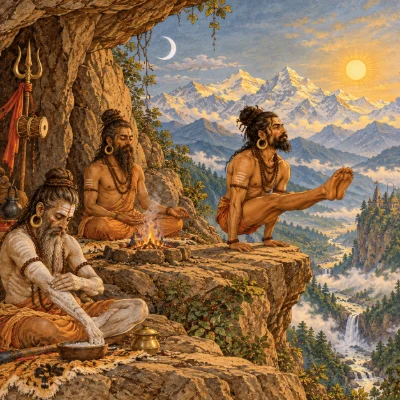
Part 2 · 1.8–1.11
Aṣṭāṅga, the four paths and Haṭha
The maps of the practice: Patañjali’s eight limbs, four paths to one goal, and Haṭha’s way through body and breath.
- Patañjali’s eight limbs
- Jñāna, Bhakti, Karma and Rāja yoga
- Haṭha yoga and its texts: HYP, GS and YS
-
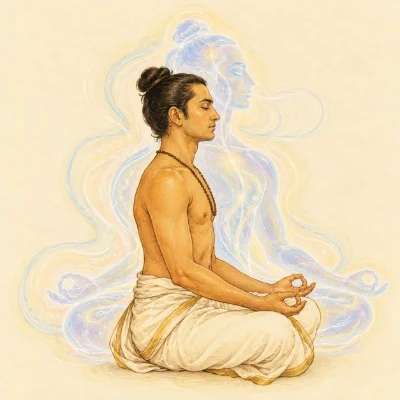
Part 3 · 1.12 · 1.14 · P1.2–P1.4
Warm-ups, Sūrya Namaskāra and āsana
Joint loosening, whole-body warm-ups, the sun salutation with its mantras, and the āsanas of the practical syllabus.
- Sūkṣma and sthūla vyāyāma
- Sūrya Namaskāra with mantra
- Āsana, steady and easy (YS 2.46)
-

Part 4 · 1.13 · P1.1
Ṣaṭkarma, the six cleansing practices
The Haṭha cleansings: why they come first, how they are done, and who should wait.
- The six kriyās and their principles
- Neti with water and with a thread
- Kuñjala and kapālabhāti, safely
-

Part 5 · 1.15–1.16 · P1.5
Prāṇāyāma, bandha and mudrā
The breath made conscious, then lengthened and steadied; the three locks and the hand seals.
- Sectional and yogic deep breathing
- Nāḍī śodhana, Śītalī and Bhrāmarī
- The three bandhas and the mudrās
-
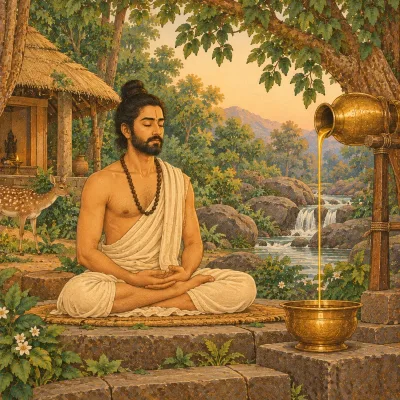
Part 6 · 1.17–1.18 · P1.6
Relaxation and meditation
From letting go of tension to a steady flow of attention, with the meditation practices of the syllabus.
- Relaxation and yoga nidrā
- Dhyāna, meditation
- Japa, ajapā, chakra meditation and Om
-
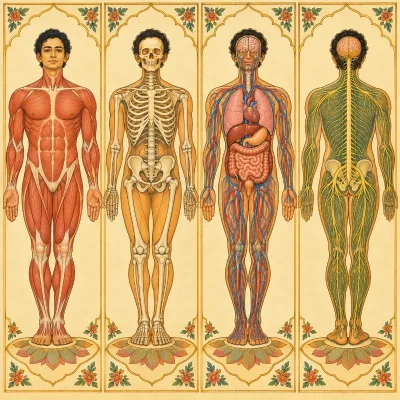
Part 7 · 2.1–2.6
The human body and yoga
How the body is built and kept in balance, and what yoga practice does to it and to the mind.
- The body’s systems and homeostasis
- The senses
- The effects of yoga, and psychology
-
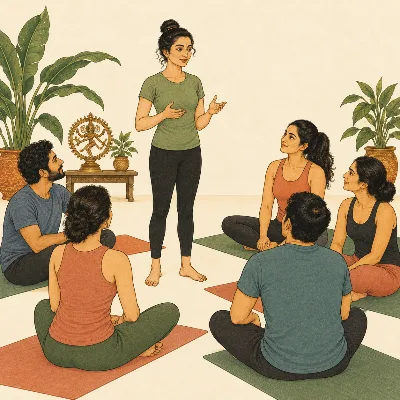
Part 8 · 3.1–3.5 · 4.1–4.7
Yoga education and teaching skills
What education and values are, what makes a good yoga teacher, and how to teach a class.
- Education, yoga education and values
- The ideal yoga teacher
- Methods, aids, groups, practice teaching and ICT
-
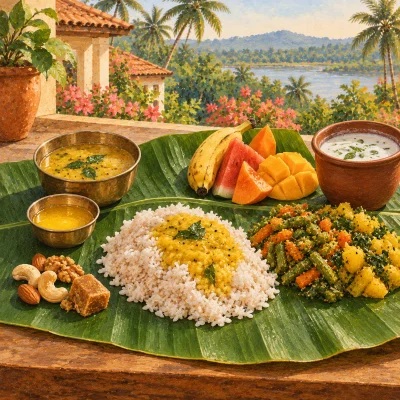
Part 9 · Nutrition
Food and daily rhythm
Sāttvic food, the rhythm of the day and of the seasons, the three doṣas and herbs.
- Sāttvic food
- Dinacaryā and ṛtucaryā, the day and the seasons
- The doṣas and herbs
-
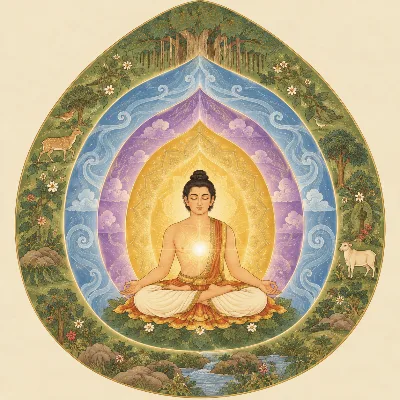
Part 10 · Wellness
Yoga for wellness
How yoga supports health alongside medical care, seen through the five kośas, with eight common conditions.
- Yoga therapy, health and disease
- The five kośas and the tools of therapy
- Eight conditions, from diabetes to pregnancy
Also in the library. The weekly class notes record what my teachers said in each session, from the eight limbs and a steady seat (6 September) to darśana and the six schools (18 October). The history of yoga talk tells the story from an Indus seal to Rajpath, and the āsana library has a card for nearly every pose in the practical syllabus.
Review Questions I missed
Review my misses
Each unit has short checks along the way and a unit check at the end. Any question I get wrong comes back here: the same day, then again after 1, 3, 7 and 21 days as long as I keep getting it right. Progress stays in this browser only; nothing is sent anywhere. The checks are live in Prāṇāyāma, bandha and mudrā first.
The review needs JavaScript. Without it, every unit still ends with a list of revision questions and answers.
Books Prescribed reading
The books behind the syllabus
In one line
My teachers prescribed five books, and those books explain a handful of classical texts. These notes explain both in my own words: the modern books are named but never quoted, and the classical texts are cited by chapter and verse.
Animation · the book shelf
Five books on one shelf
Prescribed · āsana and prāṇāyāma
Light on Yoga
B.K.S. Iyengar
Teaches each āsana step by step, with photographs and close attention to alignment, and gives prāṇāyāma a part of its own. It opens with Patañjali’s eight limbs.
Used for: āsana, prāṇāyāma and the bandhas, the eight limbs.
Hover, focus or tap a spine to take the book out and see what these notes use it for.
-
Prescribed · āsana and prāṇāyāma
Light on Yoga
B.K.S. Iyengar
Teaches each āsana step by step, with photographs and close attention to alignment, and gives prāṇāyāma a part of its own. It opens with Patañjali’s eight limbs. Source
Used for: āsana, prāṇāyāma and the bandhas, the eight limbs.
-
Prescribed · philosophy
Ṣaḍdarśana: the six systems of Hindu philosophy
Swami Harshananda · Ramakrishna Math
An introduction to the six classical systems (ṣaḍ, six; darśana, a way of seeing), among them the Yoga darśana itself and its partner, Sāṅkhya.
Used for: what a darśana is, the six schools, and the Vedānta behind jñāna yoga.
-
Prescribed · the root text
Patañjali’s Yoga Sūtra
Patañjali
The root text of the Yoga darśana: short aphorisms in four pādas (chapters), 195 sūtras in the edition cited here; some editions count 196. Source
Used for: the definition of yoga (1.2), the eight limbs (2.29), āsana (2.46), prāṇāyāma (2.49) and dhyāna (3.2).
-
Prescribed · the Haṭha text
Hatha Yoga Pradipika
Swami Muktibodhananda · Bihar School of Yoga, Munger
An English edition of Svātmārāma’s Haṭha Yoga Pradīpikā, the classic Haṭha text, with a detailed commentary by Swami Muktibodhananda. Editions number the verses a little differently; these notes follow this one.
Used for: Haṭha yoga and its texts, the six cleansing kriyās, and the Pradīpikā’s verses on prāṇāyāma.
-
Prescribed · practice manual
Asana Pranayama Mudra Bandha
Swami Satyananda Saraswati · Bihar School of Yoga, Munger
A practice manual: as its title says, it teaches āsana, prāṇāyāma, mudrā and bandha, step by step. Both Bihar School books are published by Yoga Publications Trust, Munger, set up in 2000 to spread the teachings of the Bihar Yoga tradition. Source
Used for: Sūrya Namaskāra, the breathing practices, the bandhas and the mudrās.
-
The sources the books explain
The classical texts
Cited by chapter and verse throughout these notes
- Haṭha Yoga Pradīpikā (HYP), by Svātmārāma: four chapters in most editions. Verse numbers can differ by one or two between editions; these notes follow the Bihar School edition above.
- Gheraṇḍa Saṁhitā (GS): the sage Gheraṇḍa teaches seven limbs, one per chapter (GS 1.10–1.11).
- Bhagavad Gītā (BG): eighteen chapters; yoga as evenness (2.48) and as skill in action (2.50).
- The principal Upaniṣads: books differ on how many are “principal”; ten is the classic list, often extended to eleven or more.
Used for: the three texts compared, yoga in the Upaniṣads, the definitions.
If you read only one line of the whole syllabus, read this one. It is the second sūtra of the Yoga Sūtra, and every part of these notes comes back to it:
योगश्चित्तवृत्तिनिरोधः ॥ २ ॥yogaś citta-vṛtti-nirodhaḥ
Yoga is the stilling of the movements of the mind. Yoga Sūtra 1.2 · Source
The home page shows this sūtra as still water: when the ripples settle, the moon is reflected whole.
Theory 1.1–1.18 · 2.1–2.6 · 3.1–3.5 · 4.1–4.7 · nutrition · wellness
The theory syllabus, item by item
In one line
Theory is what you must be able to explain: what yoga is and where it comes from, how each practice works, the body, teaching, food and wellness. Every item below links to the place where it is explained.
The list follows the syllabus numbers, so it jumps between pages in two places: 1.13 (ṣaṭkarma) has a unit of its own, while 1.12 and 1.14 share the warm-up and āsana unit. Nutrition and wellness carry no numbers in the syllabus; they are listed by topic.
Animation · the theory path
45 steps, from the meaning of yoga to yoga for wellness
Each dot is one syllabus item. The dots light up as you scroll past them, and the gold line shows how far you have come.
Unit 1 · Foundation of Yoga · 1.1–1.18
- 1.1 Yoga: the word, its definitions, its aim Foundations
- 1.2 Origin, history and development of yoga Foundations
- 1.3 Yoga in the principal Upaniṣads Foundations
- 1.4 Yoga in the Jaina and Bauddha traditions Foundations
- 1.5 Bhāratīya darśana: philosophy as a way of seeing Foundations
- 1.6 Sādhaka and bādhaka: what helps and what hinders practice Foundations
- 1.7 The six darśanas Foundations
- 1.8 Aṣṭāṅga yoga, the eight limbs Paths
- 1.9 The four paths: Jñāna, Bhakti, Karma and Rāja yoga Paths
- 1.10 Haṭha yoga Paths
- 1.11 Haṭha Yoga Pradīpikā, Gheraṇḍa Saṁhitā and Yoga Sūtra Paths
- 1.12 Sūkṣma vyāyāma · sthūla vyāyāma · Sūrya Namaskāra Warm-ups and āsana
- 1.13 Concept and principles of ṣaṭkarma · safety Ṣaṭkarma
- 1.14 Yogāsana: meaning, types and principles Warm-ups and āsana
- 1.15 Concept of prāṇāyāma Prāṇāyāma
- 1.16 Concept of bandha · concept of mudrā Prāṇāyāma
- 1.17 Yogic relaxation techniques · yoga nidrā Meditation
- 1.18 Dhyāna and its role in health and well-being Meditation
Unit 2 · Yoga and Health · 2.1–2.6
- 2.1 Introduction to the human body Body
- 2.2 Basic structure and functions of the body systems Body
- 2.3 Homeostasis Body
- 2.4 Sensory organs Body
- 2.5 Impact of yogic practices on the body systems Body
- 2.6 Introduction to psychology Body
Unit 3 · Applied Yoga · 3.1–3.5
- 3.1 Education Teaching
- 3.2 Yoga in education Teaching
- 3.3–3.4 Value education Teaching
- 3.5 The ideal yoga teacher Teaching
Unit 4 · Teaching Skills · 4.1–4.7
- 4.1–4.2 Methods of teaching and evaluation Teaching
- 4.3 Factors influencing yoga teaching Teaching
- 4.4 Teaching practice and the lesson plan Teaching
- 4.5 Teaching aids and presentation Teaching
- 4.6 Individual, small group, large group Teaching
- 4.7 Audio-visual aids, ICT and online resources Teaching
Nutrition · food and daily rhythm
- N Yogic diet: sāttvic principles Food
- N Dinacaryā, the daily routine Food
- N Ṛtucaryā, the seasonal routine Food
- N Tridoṣa: the three doṣas Food
- N Simple herbal aids Food
Wellness · yoga for health
- W Introduction to yoga therapy Wellness
- W Concept of disease in the yogic view Wellness
- W Pañcakośa theory in healing Wellness
- W Role of āsana, prāṇāyāma, dhyāna and kriyā in therapy Wellness
- W Yoga for common conditions Wellness
- W Eight conditions: diabetes · back pain · thyroid · PCOS · headache · asthma · digestion · pregnancy Wellness
N and W are only our markers for the nutrition and wellness topics, not syllabus codes.
Practical P1.1–P1.6
The practical syllabus, item by item
In one line
Practical is what you must be able to do, safely, and to teach: cleansing, warm-ups, 33 āsanas, Sūrya Namaskāra with its mantras, breathing practices and meditation.
Before you practise
These pages are study notes, not a substitute for a teacher. Learn the cleansing kriyās, the prāṇāyāmas and the inverted āsanas from a trained teacher before practising alone. If you have a medical condition, are pregnant, or are recovering from an illness or surgery, ask your doctor first: yoga can support treatment, never replace it. Each unit page lists the cautions for its practices.
Animation · the practical path
19 steps, from the neti pot to Om
Each dot is one practical item. The dots light up as you scroll past them, and the gold line shows how far you have come.
P1.1 · Ṣaṭkarma, cleansing
- P1.1 Neti: jala neti with water, sūtra neti with a thread Ṣaṭkarma
- P1.1 Vamana dhauti (kuñjala) Ṣaṭkarma
- P1.1 Kapālabhāti Ṣaṭkarma
P1.2 · Yogic vyāyāma, warm-ups
- P1.2 Sūkṣma vyāyāma, loosening every joint Warm-ups and āsana
- P1.2 Sthūla vyāyāma, warming the whole body Warm-ups and āsana
P1.3 · Yogāsana, in four families
- P1.3 Standing: Tāḍāsana · Trikoṇāsana · Ūrdhva Hastottānāsana* · Vṛkṣāsana · Ardha Cakrāsana · Pādahastāsana · “Ashwasthasana”*
- P1.3 Sitting: Padmāsana · Vakrāsana · Ardha Matsyendrāsana · Jānu Śīrṣāsana · Paścimottānāsana · Vajrāsana · Uṣṭrāsana · Śaśāṅkāsana · Gomukhāsana · Maṇḍūkāsana · Bhadrāsana · Siṁhāsana
- P1.3 Prone, lying face down: Bhujaṅgāsana · Śalabhāsana · Dhanurāsana · Makarāsana
- P1.3 Supine, lying face up: Pavanamuktāsana and variations · Setubandhāsana · Sarvāṅgāsana · Ardha Halāsana · Uttānapādāsana · Halāsana · Naukāsana · Cakrāsana · Markaṭāsana · Śavāsana
P1.4 · Sūrya Namaskāra
- P1.4 Sūrya Namaskāra with mantra: twelve positions, twelve names of the sun Warm-ups and āsana
P1.5 · Breathing and prāṇāyāma
- P1.5 a, b Sectional breathing and yogic deep breathing Prāṇāyāma
- P1.5 c Nāḍī śodhana (anuloma-viloma) Prāṇāyāma
- P1.5 d Śītalī prāṇāyāma Prāṇāyāma
- P1.5 e Bhrāmarī prāṇāyāma Prāṇāyāma
P1.6 · Meditation practices
- P1.6 a Praṇava japa and So’ham japa Meditation
- P1.6 b Yoga nidrā Meditation
- P1.6 c Chakra meditation Meditation
- P1.6 d Ajapā dhāraṇā Meditation
- P1.6 e Om meditation Meditation
* Two āsana names need care. For Ūrdhva Hastottānāsana the library card shows the related raised-arms pose, Hastottānāsana; the āsana page explains the difference, so check which one your teacher expects. “Ashwasthasana” is unclear in the syllabus: no Indian source I could find describes a pose by this name. It may be Aśvatthāsana, the peepal-tree pose, so it stays unlinked until my teacher confirms it. Both are discussed on the āsana page. For a second set of pictures, the Morarji Desai National Institute of Yoga (MDNIY) publishes an illustrated Yogāsana booklet on the Ministry of Ayush yoga portal.
Test yourself
Quick revision
What are the two halves of the syllabus, and how do you tell their items apart?
Theory and practical. Theory items have plain numbers in four units (1.1–1.18, 2.1–2.6, 3.1–3.5, 4.1–4.7), plus the nutrition and wellness topics. Practical items start with P (P1.1–P1.6).
Name the five prescribed reference books.
Light on Yoga by B.K.S. Iyengar; Ṣaḍdarśana: the six systems of Hindu philosophy by Swami Harshananda (Ramakrishna Math); Patañjali’s Yoga Sūtra; and two from the Bihar School of Yoga, Munger: the Hatha Yoga Pradipika with Swami Muktibodhananda’s commentary, and Swami Satyananda Saraswati’s Asana Pranayama Mudra Bandha.
How is the Yoga Sūtra arranged?
In four pādas: Samādhi (51 sūtras), Sādhana (55), Vibhūti (55) and Kaivalya (34), 195 in all. Some editions count 196.
Give Patañjali’s definition of yoga, with its number.
Yoga Sūtra 1.2: yogaś citta-vṛtti-nirodhaḥ, yoga is the stilling of the movements of the mind.
Give two definitions of yoga from the Bhagavad Gītā.
2.48: samatvaṁ yoga ucyate, evenness of mind is called yoga. 2.50: yogaḥ karmasu kauśalam, yoga is skill in action.
How many limbs do the Yoga Sūtra, the Haṭha Yoga Pradīpikā and the Gheraṇḍa Saṁhitā teach?
Eight in Patañjali’s Yoga Sūtra (2.29), four in Svātmārāma’s Haṭha Yoga Pradīpikā, and seven in the Gheraṇḍa Saṁhitā (1.10–1.11), which begins with ṣaṭkarma. The three texts are compared side by side.
Which practices make up P1.1 and P1.5?
P1.1, ṣaṭkarma: neti (jala and sūtra), vamana dhauti (kuñjala) and kapālabhāti. P1.5: sectional and yogic deep breathing (a, b), nāḍī śodhana (c), Śītalī (d) and Bhrāmarī (e).
Into which four families are the practical āsanas sorted here, and how many are there?
By body position: standing (7), sitting (12), prone or face down (4) and supine or face up (10): 33 in all, counting Pavanamuktāsana with its variations as one and the unclear “Ashwasthasana” as one.
Which syllabus unit covers homeostasis, and what is its code?
Unit 2, Yoga and Health: item 2.3. These notes explain it on the human body page.
Sources
Where this comes from
- Prescribed books (named, never quoted; explained in my own words): B.K.S. Iyengar, Light on Yoga; Swami Harshananda, Ṣaḍdarśana: the six systems of Hindu philosophy (Ramakrishna Math); Patañjali, Yoga Sūtra; Hatha Yoga Pradipika, with commentary by Swami Muktibodhananda (Bihar School of Yoga / Yoga Publications Trust, Munger), whose verse numbers these notes follow; Swami Satyananda Saraswati, Asana Pranayama Mudra Bandha (Bihar School of Yoga / Yoga Publications Trust, Munger).
- Yoga Sūtra 1.2, 2.29, 2.46, 2.49, 3.2 (text); 1.51, 2.55, 3.55, 4.34 (the last sūtra of each pāda, for the 51, 55, 55, 34 count): Heritage IITKanpur (formerly the Gita Supersite).
- Bhagavad Gītā 2.48, 2.50, and 18.78 (the last verse, for the eighteen chapters): Heritage IITKanpur.
- Haṭha Yoga Pradīpikā and Gheraṇḍa Saṁhitā 1.10–1.11: authorship from NIOS, Haṭha yoga lesson; chapters, limbs and editions as set out, with their sources, on the paths page.
- Yoga Certification Board, Ministry of Ayush: home page (levels of certification); Yoga Wellness Instructor syllabus (theory and practical marks).
- MDNIY, Yogāsana booklet, on the Ministry of Ayush yoga portal.
- Bihar School of Yoga, Munger: Yoga Publications Trust (set up in 2000; publisher of the two Bihar School books).
- Ramamani Iyengar Memorial Yoga Institute, About Iyengar Yoga.
- The syllabus items themselves: the syllabus of the certification I am studying, in the pattern of the Yoga Certification Board. The unit pages carry the detailed sources for each item.