Talk · Yoga Theory homework · 10 minutes

From a seal to Rajpath: the history of yoga

A 10-minute talk for the 11 October homework on the origin, history and development of yoga. Every fact carries its source: Indian textbooks and government pages, plus short clips from the documentary History of Yoga by Vishuddhi Films, which play in place.

Speaker script

→ or a clicker: next · ← back · F full screen · N notes · B blank screen · L laser pointer · on a phone, swipe

Yoga Theory · origin, history and development

From a seal
to Rajpath

5,000 years of yoga in 10 minutes.

Press → or tap the slide to begin.

“Sit with me.”

Bhadrāsana

Soles together, knees wide, spine tall. We learnt it last class Āsana library and it is in the Common Yoga Protocol. CYP

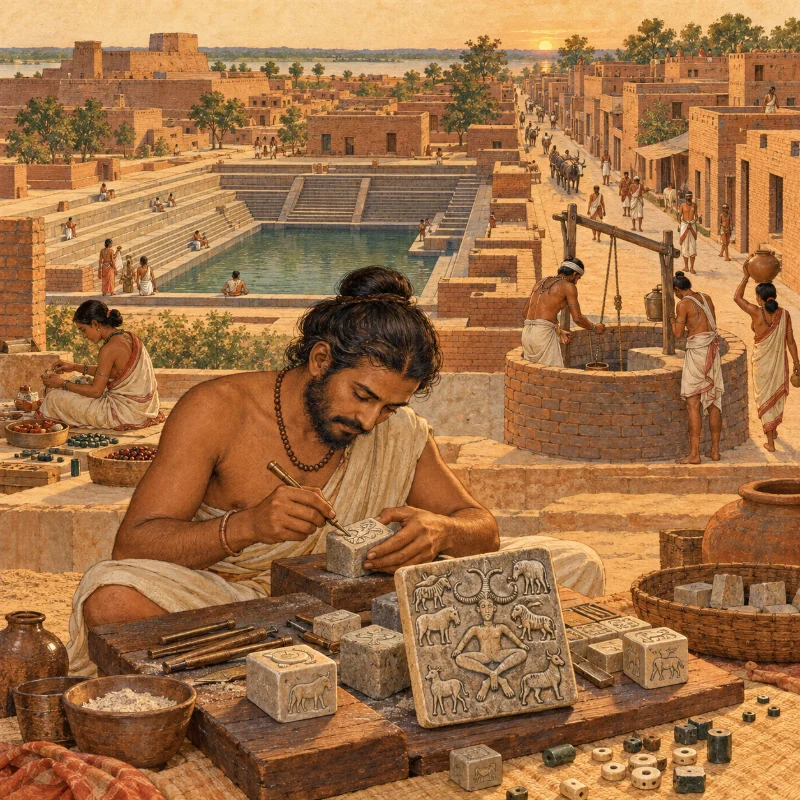
Now picture a stone seal, about 5,000 years old, with a figure sitting much like you. NCERT

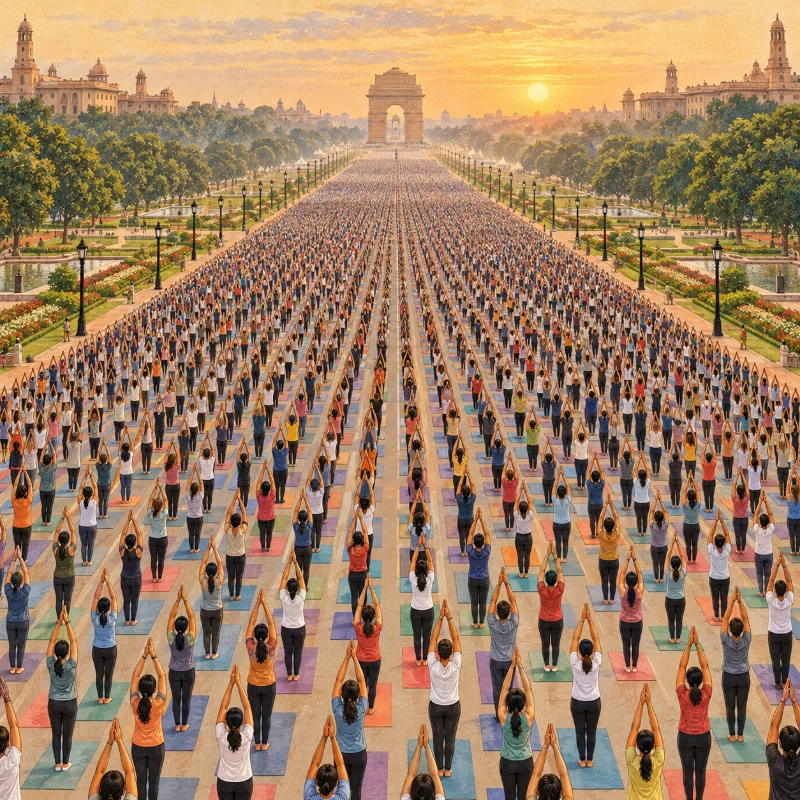
21 June 2015, Rajpath, New Delhi: 35,985 people did yoga together. PIB

How did we get from that seal to Rajpath?

The word

Yoga comes from yuj: to join

“to join” or “to yoke” or “to unite”: the union of individual consciousness with the universal. MDNIY

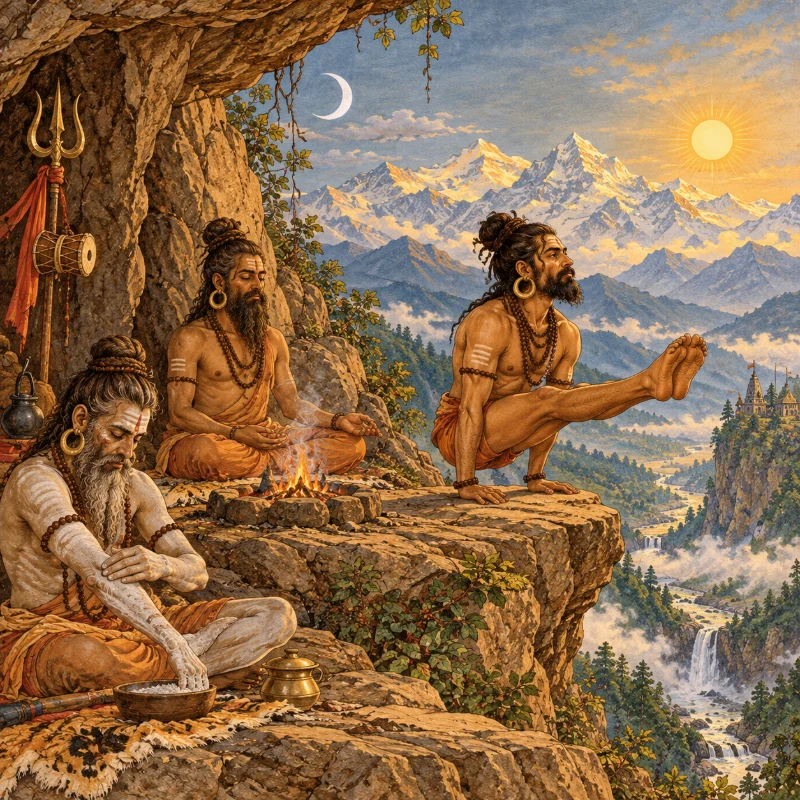
In mythology, Śiva is the first teacher of yoga. MDNIY The Nāth yogis call him Ādinātha, the first yogi.

The sage Agastya, one of the seven sages, travelled across the subcontinent and built a culture around a yogic way of life. CYP
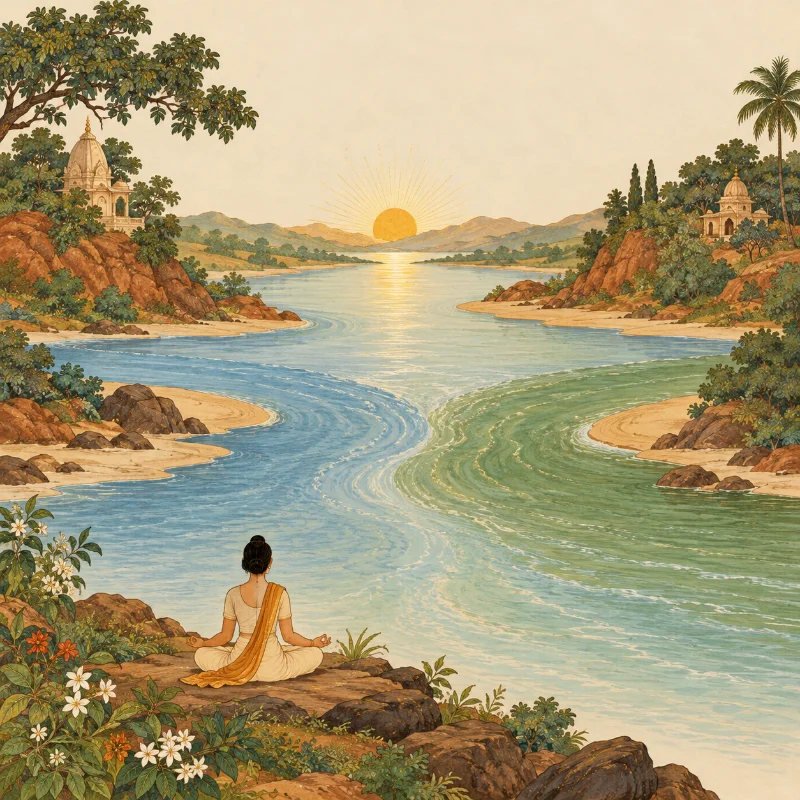
Two rivers, one blue and one green, merging at a sangam at sunrise while a figure meditates on the bank युज्

Drawn for this talk. The signs are made up: the real Indus script is still unread.

About 2700–3000 BC · Indus valley

The first clues are carved in stone

Stone seals from Indus valley sites show figures in yogic postures. NCERT MDNIY

Archaeologists point to 16 specific “yogic poses”. NIOS

Do the seals prove yoga is 5,000 years old?

MDNIY“suggest”

NCERT“indicated”

NIOS“it is sure”

Same seals, three levels of certainty, and the Indus script is still unread. NIOS
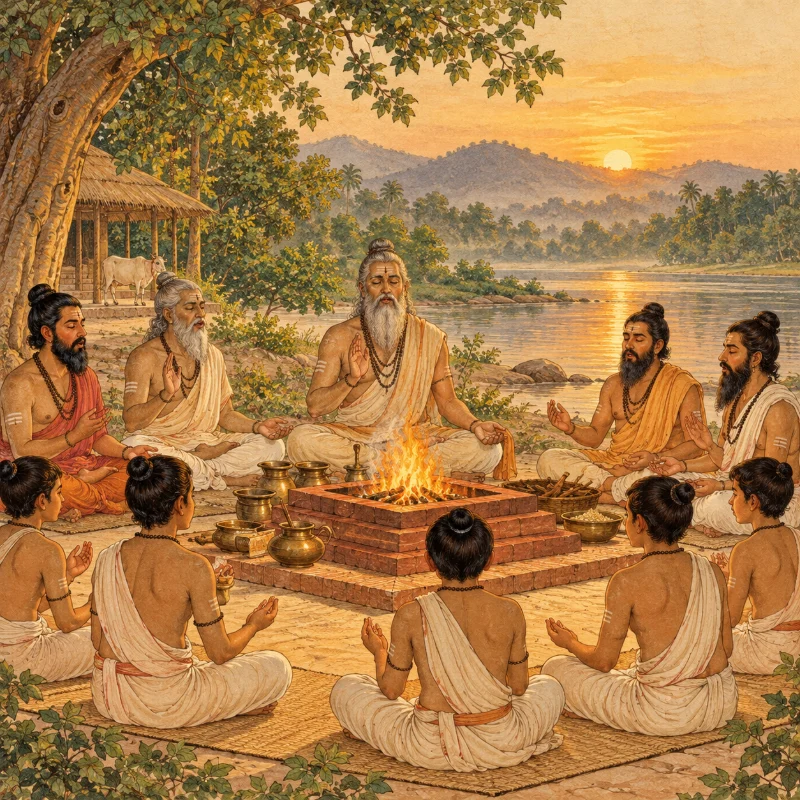
Vedic and Upaniṣadic period

From hymns to the inner search

4 VedasBrāhmaṇasĀraṇyakasUpaniṣads

The Ṛgveda uses the word yunjate: an idea of yoga as control of the senses. NIOS

The Upaniṣads give jñāna, karma and dhyāna yoga NCERT, and the Bṛhadāraṇyaka has an early reference to meditation. NIOS

In the Kaṭha Upaniṣad, Yama, the god of death, reveals yoga. Its chariot of the self was in our 4 October class.
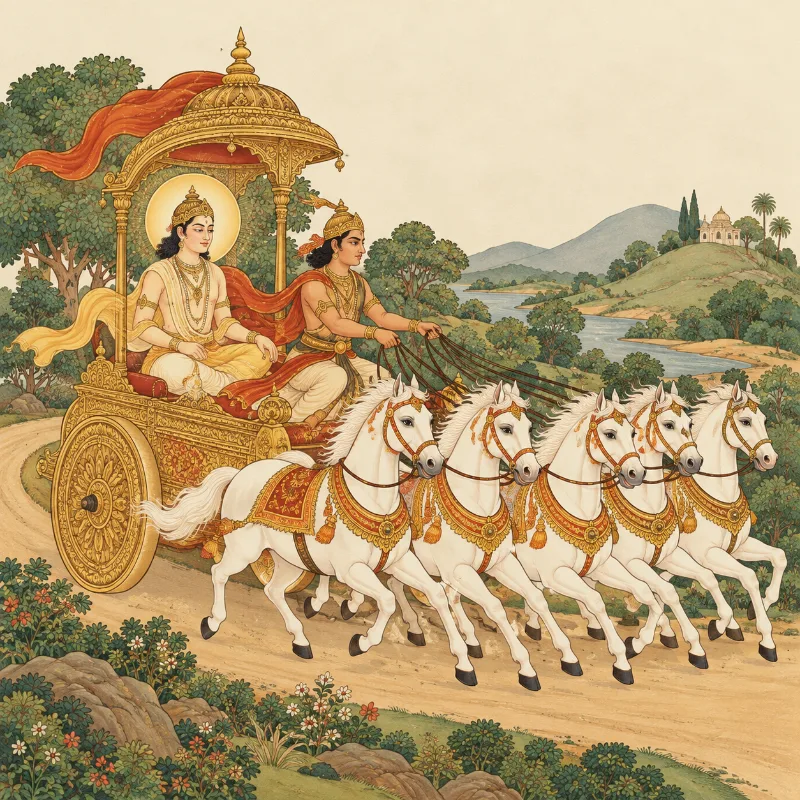
The chariot of the Kaṭha Upaniṣad: a calm rider, a charioteer holding the reins, and five white horses on a forest road

Classical period · 500 BC – 800 AD, “tentatively” MDNIY

Many paths

Mahāvīra

Pañca mahāvrata: the five great vows.

The Buddha

Aṣṭa magga: the eightfold path.

Bhagavad Gītā

Jñāna, bhakti and karma yoga, on our map.

MDNIY calls the vows and the eightfold path the “early nature of Yoga sadhana”; the Gītā explains it more fully. MDNIY

Case file · the man in our opening prayer

When did Patañjali live?

Clue 1His grammar book gives an example: “the Greeks are besieging Madhyamikā”.

Clue 2Madhyamikā is the old name of Chittor, besieged between 184 and 148 BC.

Clue 3So he may have lived in the time of King Puṣyamitra Śuṅga.

The catch: the film credits one Patañjali with the grammar, the Yoga Sūtra and an Āyurveda text, and itself says “if” it was a single man.

≈ 147 BC NIOS’s answer NIOS
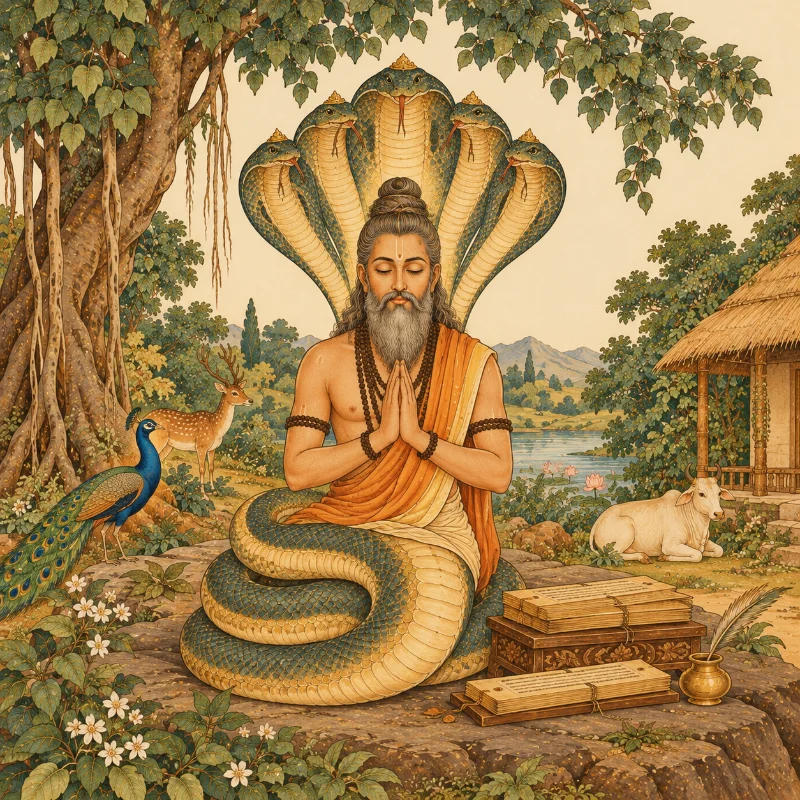
The sage Patañjali in his traditional form, half sage and half serpent, beside palm-leaf manuscripts

Patañjali’s date

A date, or a period?

The textbooks give a period, not a date. Whenever he lived, Patañjali gave yoga four books NIOS, the four pādas on our map, short enough, the film says, to fit on one page.

Post-classical period · 800–1700 AD MDNIY

Haṭha: the sun meets the moon

Hasun · piṅgalā nāḍī · prāṇa, the vital forceṬhamoon · iḍā nāḍī · the mind

Haṭha means the union of the two: prāṇa and the mind. NIOS
  1. ĀdināthaŚiva, the first yogi
  2. Matsyendranātha8th–10th century
  3. Gorakṣanātha8th–12th century
  4. SvātmārāmaHaṭha Yoga Pradīpikā, 14th c.
  5. GheraṇḍaGheraṇḍa Saṃhitā, 17th c.

MDNIY

Haṭha yoga

How many limbs does yoga have?

Patañjali, Yoga Sūtra8

Gorakṣaśataka6

Haṭha Yoga Pradīpikā4

Gheraṇḍa Saṃhitā7

Eight limbs: NIOS Six, four and seven: MDNIY

Is Haṭha yoga medieval?

The film“It is wrong to believe that hatha yoga originated in the medieval period”: hard Haṭha postures appear on 5,000-year-old figurines.

The textbooksThe Nāth yogis spread Haṭha in 800–1700 AD. MDNIY The film itself calls Matsyendranātha, 8th–10th century, its founder.

Modern period

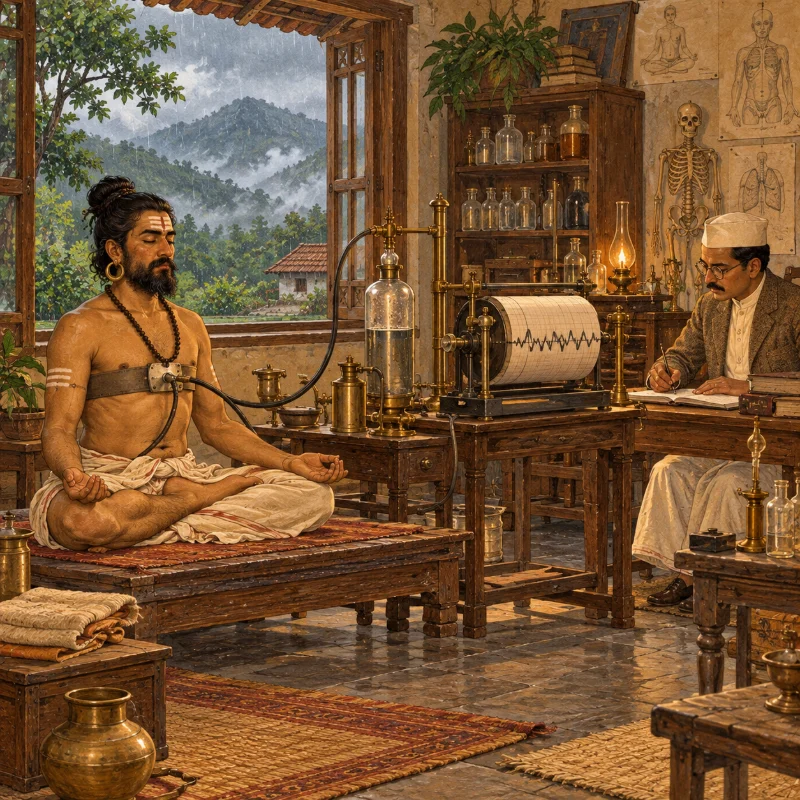
Yoga goes to the lab

  1. 1893Vivekananda travels to America. His Rāja Yoga looks at yoga “in the light of modern science”.
  2. 1917Swami Kuvalayananda founds Kaivalyadhama at Amalner. Kaivalyadhama
  3. 1924A research centre at Lonavala, and Yoga Mimamsa, the oldest scientific yoga journal. Kaivalyadhama
  4. 1973Researchers in Udaipur test “the Yogic claim of voluntary control over the heart beats” in the American Heart Journal.

Teachers who carried yoga to the world MDNIY

Swami SivanandaT. KrishnamacharyaSwami KuvalayanandaShri YogendraSri AurobindoSwami RamaMaharishi Mahesh YogiPattabhi JoisB.K.S. IyengarSwami Satyananda Saraswati

Swami Satyananda’s Bihar School of Yoga is in Munger. BSY

Today · December 2014 PIB

The UN names 21 June the International Day of Yoga

175co-sponsors: the most ever for a UN General Assembly resolution

< 90days from India’s proposal to the vote, a first at the UN

21 Junethe longest day in the Northern Hemisphere

Rajpath, 21 June 2015
35,985 people, 84 nationalities, 2 Guinness World Records. PIB
Each little figure is 100 people.

December 2016 · Addis Ababa

Yoga becomes world heritage

UNESCO inscribes yoga on its list of the Intangible Cultural Heritage of Humanity. All 24 of 24 committee members support it, and it is India’s 13th element. PIB

The whole story

A seal, the Upaniṣads, Patañjali, the Nāth yogis, Rajpath … and this room.

Same seat.

2026

Thank you. Questions?

If there is time

Quick quiz

1. Yoga comes from the root…
2. In Haṭha, “ha” stands for the…
3. How many people did yoga on Rajpath in 2015?
4. Svātmārāma wrote the…

For questions

Where the sources disagree

QuestionOne viewAnother view
When did Patañjali live?About 147 BC (NIOS). The film: King Puṣyamitra’s time, if the grammarian is the same man.Only a period: the classical age, 500 BC – 800 AD, “tentatively” (MDNIY, NCERT).
Do the seals prove yoga?“it is sure” (NIOS); “indicated” (NCERT).They “suggest” it (MDNIY), and the Indus script is unread.
Is Haṭha yoga medieval?No: its postures are on 5,000-year-old figurines (film, 0:23:25).Yes: the Nāth yogis, 800–1700 AD (MDNIY, NIOS). The film also calls Matsyendranātha, 8th–10th century, its founder.
How old is yoga?A “6,000-year journey” (film, 1:29:33); pre-Vedic period 6000–3000 BC (NIOS).2700 BC (MDNIY); 3000 BC (NCERT).
The UN vote10 December 2014 (PIB).11 December 2014 (NIOS).
Only in the filmHarappan society was matriarchal (0:16:13). Sāṅkhya is “atheist” (0:08:49). The names iḍā, piṅgalā and suṣumnā are not Sanskrit and the idea grew in the Tamil region (0:59:03). The chakras may come from the Tamil Siddhas (1:01:53). The textbooks used here do not say these.

Every fact on these slides comes from

Sources

  1. MDNIY: I. V. Basavaraddi, “Yoga: Its Origin, History and Development”, Morarji Desai National Institute of Yoga.
  2. NCERT: Knowledge Traditions and Practices of India, Class XI, chapter “Yoga”.
  3. NIOS: Physical Education and Yog (373), Lesson 1; and Lesson 18, Haṭha yog.
  4. CYP: Common Yoga Protocol, Ministry of Ayush.
  5. PIB: International Day of Yoga background; Ministry of Ayush, 2015 review; UNESCO inscription, December 2016.
  6. Kaivalyadhama: “The Legacy”.
  7. BSY: Bihar School of Yoga, Munger.
  8. Film: History of Yoga (full film, English), Vishuddhi Films, 2022. Clips play from YouTube.

The figure, the seal and the charts are drawn for this page. The signs on the seal are invented. Illustrations are AI-generated.

From History of Yoga by Vishuddhi Films · Open on YouTube

Speaker script

What to say, slide by slide

About ten minutes in all. Press N during the talk to see the same notes under the slide.

    Presenting

    How to present from this page

    • Laptop and projector: press Present full screen, then use the arrow keys or a presentation clicker. B blanks the screen, L turns the mouse into a laser pointer.
    • Phone to a TV: turn the phone sideways, tap Present full screen, and tap the right side of the slide to go on (left side to go back), or swipe.
    • Film clips: the orange ▶ tags play a few seconds of the documentary in place. They need an internet connection.
    • Timer: starts with the first step; the dot turns gold if you fall behind and the time turns red after 10 minutes.

    ← Class notes, 11 October 2026 · Back to the library