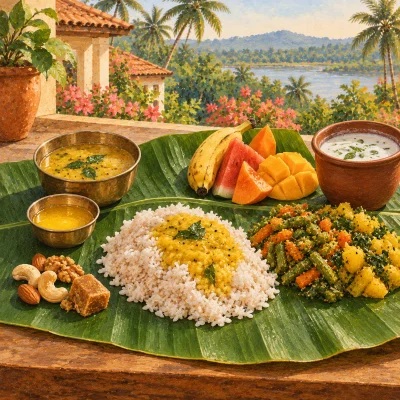
Nutrition Yogic diet · sāttvic principles
Sāttvic food: the three guṇas on a plate
In one line
Food has a quality as well as a taste. The Bhagavad Gītā sorts it by the three guṇas: food that brings life, strength and cheer is sāttvic; food that is too pungent, sour, salty, hot and burning is rājasic; food that is stale, spoiled or impure is tāmasic. The Haṭha texts add one rule above all: eat a measured meal, mitāhāra.
Three qualities in everything
Guṇa means quality, or strand. Sāṅkhya, the darśana that gives yoga its map of the person, teaches that all of nature (prakṛti) is woven from three of them: sattva, clarity, lightness and balance; rajas, activity, desire and restlessness; tamas, heaviness, inertia and dullness. They mix in everything, food included, and their balance keeps shifting. Swami Harshananda’s Ṣaḍdarśana explains them under Sāṅkhya; see also the six darśanas. Ayurveda uses the same three for the mind: the Central Council for Research in Ayurvedic Sciences (CCRAS) calls sattva the pure quality, and rajas and tamas the two “doṣas of the mind” (mano-doṣa). Source
Why should food matter to the mind? The Chāndogya Upaniṣad gives the classic answer, and the commentators on the Gītā’s food verses quote it:
आहारशुद्धौ सत्त्वशुद्धिः सत्त्वशुद्धौ ध्रुवा स्मृतिः ।āhāra-śuddhau sattva-śuddhiḥ, sattva-śuddhau dhruvā smṛtiḥ
When the food is pure, the mind (sattva) becomes pure; when the mind is pure, remembrance (smṛti) becomes steady.
Chāndogya Upaniṣad 7.26.2, quoted in the commentaries on Bhagavad Gītā 17.8 · Source
The Gītā’s three kinds of food
In chapter 17 Kṛṣṇa says that faith, sacrifice, austerity and charity come in three kinds, and so does the food each person likes: a taste for a kind of food shows a person’s nature. Three verses describe the foods.
आयुःसत्त्वबलारोग्यसुखप्रीतिविवर्धनाः । रस्याः स्निग्धाः स्थिरा हृद्या आहाराः सात्त्विकप्रियाः ॥āyuḥ-sattva-balārogya-sukha-prīti-vivardhanāḥ · rasyāḥ snigdhāḥ sthirā hṛdyā āhārāḥ sāttvika-priyāḥ
Foods that increase life, purity, strength, health, happiness and cheer, and that are juicy (rasya), gently oily (snigdha), substantial and lasting (sthira) and pleasing to the heart (hṛdya), are dear to the sāttvic.
Bhagavad Gītā 17.8 · Source
कट्वम्ललवणात्युष्णतीक्ष्णरूक्षविदाहिनः । आहारा राजसस्येष्टा दुःखशोकामयप्रदाः ॥kaṭv-amla-lavaṇāty-uṣṇa-tīkṣṇa-rūkṣa-vidāhinaḥ · āhārā rājasasyeṣṭā duḥkha-śokāmaya-pradāḥ
Foods that are pungent, sour, salty, very hot, sharp, dry and burning are liked by the rājasic; they bring pain, grief and disease.
Bhagavad Gītā 17.9 · Source
यातयामं गतरसं पूति पर्युषितं च यत् । उच्छिष्टमपि चामेध्यं भोजनं तामसप्रियम् ॥yāta-yāmaṁ gata-rasaṁ pūti paryuṣitaṁ ca yat · ucchiṣṭam api cāmedhyaṁ bhojanaṁ tāmasa-priyam
Food that is stale, tasteless, putrid, kept overnight, left over by others or impure is dear to the tāmasic.
Bhagavad Gītā 17.10 · Source
Two words need care. Kaṭu is pungent, the chilli taste, in Ayurveda’s vocabulary; some translators render it “bitter”. Yātayāma means “a watch (yāma, about three hours) has passed”; translators give “stale” or “not properly cooked”. The IIT Kanpur Gita Supersite shows several translations side by side. Notice that the verses describe qualities, not a list of banned items: the same rice is sāttvic when fresh and tāmasic when it has gone stale.
Animation · The guṇa plate
One plate, three bowls
Everything lands on one plate first.
Sāttvic
BG 17.8 · life, strength, health, cheer; juicy, gently oily, lasting, pleasing
Rājasic
BG 17.9 · pungent, sour, salty, very hot, sharp, dry, burning
Tāmasic
BG 17.10 · stale, tasteless, putrid, kept overnight, left over, impure
Sorted by the Gītā’s three descriptions. Tap any food to hear why it sits in its bowl.
Freshness, quantity and the way you eat matter as much as the item. A good meal eaten in a rush, in anger or in excess loses its sāttvic quality.
Mitāhāra: the measured meal
सुस्निग्धमधुराहारश्चतुर्थांशविवर्जितः । भुज्यते शिवसंप्रीत्यै मिताहारः स उच्यते ॥susnigdha-madhurāhāraś caturthāṁśa-vivarjitaḥ · bhujyate śiva-samprītyai mitāhāraḥ sa ucyate
Agreeable, gently oily and sweet food, eaten leaving a quarter (of the stomach) free, and taken as an offering to please Śiva: this is called mitāhāra, the measured diet.
Haṭha Yoga Pradīpikā 1.58 · Source
Haṭha Yoga Pradīpikā verse numbers in these notes follow the prescribed Bihar School edition (commentary by Swami Muktibodhananda), which numbers this verse 1.58, as Kaivalyadhama does; other editions can differ by a verse or so. The Gītā says the same in its sixth chapter: yoga is not for one who eats too much, nor for one who does not eat at all (6.16), and it ends sorrow for one who is moderate in food and recreation, in effort, and in sleep and waking (6.17). Source · Source The Common Yoga Protocol names the same idea yuktāhāra, appropriate food and food habits. Source
Half, a quarter, a quarter
- Half the stomach: food
- A quarter: water
- A quarter: left empty, for air
The Gheraṇḍa Saṁhitā (chapter 5, on mitāhāra) gives the proportion yoga teachers give: fill half the stomach with food, a quarter with water, and leave a quarter empty for the movement of air. CBSE’s yoga course teaches the same rule. Source CCRAS gives it from the Ayurvedic texts of Suśruta and Vāgbhaṭa: two parts solid food, one part liquid, one part left empty “for easy movement of vāta”. Source
What the Haṭha Yoga Pradīpikā avoids and favours
Avoid · HYP 1.59–1.60
Foods unwholesome for the yogi
Bitter, sour, pungent, salty and over-heating foods; green leafy vegetables; fermented gruel; oil, sesame and mustard; alcohol, fish and meat; curd and buttermilk; horse gram, jujube, oil-cake, asafoetida and garlic (1.59). Also food reheated after it has gone cold, food that is dry, too salty or too sour, stale food, and a jumble of too many vegetables (1.60).
The next verse (1.61) quotes Gorakṣa on what a beginner should keep away from: bad company, sitting near fire, sexual activity, long journeys, early-morning baths, fasting and heavy bodily strain. Source
Favour · HYP 1.62–1.63
Foods that support practice
Good grains such as wheat, rice and barley; milk, ghee, butter, sugar candy and honey; dry ginger; paṭola, a gourd; five kinds of greens; mung and similar pulses; pure water. Food should be nourishing and sweet, mixed with milk and ghee, should build the tissues (dhātu) and should please and suit the person.
Lists summarised from the HYP and from CBSE’s yoga course, which teaches them as pathya (wholesome) and apathya (unwholesome). Source Read them in context: they were written for a haṭha practitioner devoted full time to practice, in one region and one age. The principle travels better than the list: food that is fresh, nourishing, easy to digest and taken in moderation. More on the HYP itself in Haṭha yoga.
Sāttvic eating today
- Fresh. Eat food freshly prepared; the government’s Ayurveda manual for ASHA health workers notes that reheating and refrigerating tend to lose taste and nourishment. Source
- Seasonal and local. The same manual asks for more locally available seasonal fruits and green leafy vegetables, and whole grains over refined flour.
- Cooked and served with care. Clean hands, a clean place, clean vessels, and a calm, comfortable setting. Source
- Eaten calmly. Only when hungry, after the last meal has been digested; neither too fast nor too slow; with your attention on the food (tanmanā bhojana), not while talking, laughing or watching television. Source
- Measured. Half food, a quarter water, a quarter left empty. Water a little at a time, and only a small amount after food.
- Warm, a little oily, all six tastes. CCRAS lists warm (uṣṇa), gently oily (snigdha) and light (laghu) food among its guidelines, with all six tastes: sweet, sour, salty, pungent, bitter and astringent.
- No wrong pairings. Ayurveda calls incompatible combinations viruddha āhāra; CCRAS’s examples include milk with fish, cooking or heating honey, and honey and ghee in equal amounts.
- Practice on a light stomach. The Common Yoga Protocol asks for yoga on an empty or light stomach, and for food only 20–30 minutes after practice; it adds that a vegetarian diet is usually recommended. Source Iyengar’s Light on Yoga likewise asks for āsana on an empty stomach.
A Goan kitchen, read through the guṇas
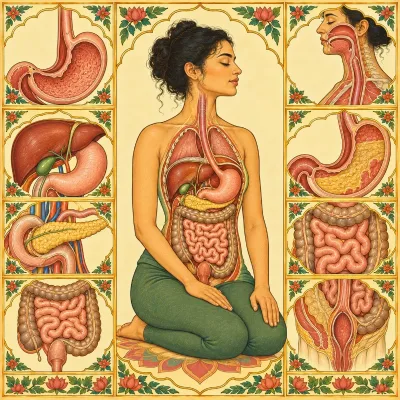
Goa’s everyday food already holds plenty of sāttvic material: local rice, seasonal vegetables and fruit, and coconut. Read it with the Gītā’s marks. Rice and a vegetable curry cooked fresh the same day are sāttvic. Coconut is rich and gently oily (snigdha), so a little goes a long way. Kokum is sour, a rājasic taste when it dominates, so it works as a seasoning, not a staple. Pickles, very hot masalas and deep-fried snacks lean rājasic. Fish, a Goan staple, is outside the HYP’s diet for the yogi (1.59). The aim is proportion and freshness, not a list of bans. In the hot months, Ayurveda’s summer advice of coconut water and buttermilk suits Goa well (see the seasons).
Food and health
- Diet advice here is general. With diabetes, kidney disease, pregnancy or any medical condition, yoga and diet changes complement treatment: work with your doctor.
- Do not fast hard or cut food sharply in the name of purity: the Gītā itself says yoga is not for one who does not eat at all (6.16).
- Adapt the HYP’s lists to your health, climate and work with a teacher; they were written for a full-time practitioner.
Nutrition Ayurveda · Dinacaryā · daily routine
Dinacaryā: a day in step with the sun
In one line
Ayurveda, yoga’s sister science, sets the day to the sun: rise before dawn, clean and care for the body, move, eat the main meal at midday, eat light and early at night, and sleep on time. A steady routine is its first tool for keeping a healthy person healthy.

Ayurveda (āyus, life, and veda, knowledge) is “the science of life”, and it gives as much attention to staying well as to treating illness. Source CCRAS sums up its first aim in one line, svasthasya svāsthya-rakṣaṇam, protecting the health of the healthy, and names its tools for it: dinacaryā and rātricaryā (the routine of day and night), ṛtucaryā (the seasonal routine), diet, and sadvṛtta (good conduct). Source
Rise in brahma muhūrta
ब्राह्मे मुहूर्त उत्तिष्ठेत् स्वस्थो रक्षार्थमायुषः ।brāhme muhūrta uttiṣṭhet svastho rakṣārtham āyuṣaḥ
A healthy person should rise in the brāhma muhūrta, to protect the life-span.
Aṣṭāṅga Hṛdaya, Sūtrasthāna 2.1 · Source
A day and a night hold 30 muhūrtas, so each is 48 minutes. Brahma muhūrta is the 14th muhūrta of the night, which begins about 96 minutes, two muhūrtas, before sunrise; with sunrise at 6, that is about 4:24 to 5:12 am. Source Government guides round it differently: one CCRAS guide says two hours before sunrise, another “preferably between 4.00 a.m. to 5.30 a.m.” Source The verse says svastha, healthy, and that is a real limit: rising this early is not advised for a sick person, or when last night’s food is still undigested.
Animation · The doṣa clock
A day on the dial
Vāta time · 2 to 6 am
Brahma muhūrta: rise before the sun
The 14th muhūrta of the night, about 96 minutes before sunrise. The house is quiet and the mind is fresh: the classic hour for waking, prayer and study. Not for the sick, or after a meal that has not digested.
- kapha
- pitta
- vāta
The dial assumes sunrise at 6 am. With a later sunrise, shift every time by the same amount.
4:45 am, vāta time: brahma muhūrta, the hour to rise.
The morning, step by step
- Water on waking (uṣāpāna). Wash, then drink lukewarm or plain water; CCRAS says the habit helps the easy passage of stool and urine. Source
- Empty the bowels and bladder. Never force, and never hold back a natural urge: Ayurveda treats suppressing urges (vega-dhāraṇa) as a root of many diseases.
- Teeth and tongue (dantadhāvana). Clean the teeth, traditionally with a twig of a bitter, astringent plant such as neem or khadira, or with triphalā powder and honey; then scrape the tongue with a curved scraper, and gargle with salt water.
- Nasya. A few drops (CCRAS: 3–5) of sesame oil, ghee or the classical medicated oil aṇu taila in each nostril in the morning. The Ayush self-care advice applies sesame oil, coconut oil or ghee in both nostrils, morning and evening (pratimarśa nasya).
- Oil in the mouth (gaṇḍūṣa, kavala). In gaṇḍūṣa the mouth is filled with a liquid and held; in kavala a smaller amount is swished around. The Ministry of Ayush’s simple version is oil pulling: one tablespoon of sesame or coconut oil, swished for 2–3 minutes, not swallowed, spat out, then a warm-water rinse; once or twice a day. Source The classical order, which CCRAS keeps, puts nasya before gaṇḍūṣa.
- Oil massage (abhyaṅga). Oil the whole body, especially the head, ears and feet, with sesame, mustard or coconut oil.
- Exercise and yoga (vyāyāma). Ayurveda’s measure is effort to about half your capacity (ardha-śakti; Aṣṭāṅga Hṛdaya, Sūtrasthāna chapter 2). CCRAS gives the sign: exercise until sweat appears on the forehead and in the armpits. A yoga practice fits here: loosening practices, Sūrya Namaskāra, āsana and nāḍī śodhana. Yoga’s own morning cleanse, jala neti, belongs before it.
- Bath (snāna). Water neither very hot nor very cold, and no hot water over the head. After yoga, wait 20–30 minutes before bathing or eating (Common Yoga Protocol).
- Stillness (dhyāna). CCRAS closes its morning list with a few minutes to an hour of quiet meditation. More in dhyāna.
Before you copy a routine
- Do not rise in brahma muhūrta when you are ill, or when last night’s meal has not digested.
- CCRAS says nasya should not be used in toxic conditions, indigestion or respiratory illness, or after childbirth.
- With heart disease, lung disease or any illness, choose exercise with care and ask your doctor; CCRAS names cough, tuberculosis and heart disease as conditions that need a careful choice.
- Do not bathe straight after a meal. Never swallow the oil from oil pulling.
Meals and the evening
Ayurveda makes lunch the main meal. CCRAS’s routine asks for a dinner lighter than lunch, of easily digested food eaten warm, at least three hours before bed (elsewhere the same guide says two to three), followed by a slow walk of about a hundred steps. Avoid curd at night and heavy food in the evening, and rest a little after any meal before heavy work. Source
Before sleep, rub a little oil into the scalp, the soles and the palms. An adult needs on average six to seven hours of sleep (CCRAS; the ASHA manual says six to eight). Avoid sleeping by day, except a short rest in summer, and avoid staying up late. Source For a deliberate rest, see yoga nidrā and Śavāsana.
The doṣa clock
Each doṣa (see below) has its hours. The classical rule (Aṣṭāṅga Hṛdaya, Sūtrasthāna chapter 1) divides the day, and the night, into three parts each: kapha rules the first, pitta the middle and vāta the last. The same order runs through a lifetime (kapha in childhood, pitta in the middle years, vāta in old age) and through the digestion of a meal. Teachers draw it as a clock of about four hours per doṣa, with sunrise at 6: kapha about 6 to 10, pitta 10 to 2, vāta 2 to 6, morning and evening alike. It is a teaching picture, not a timetable: the hours slide with your own sunrise and season. Its logic matches the routine: rise in vāta’s light, clear hours before kapha’s heavy morning sets in, move during kapha time, eat the main meal at pitta’s midday, and be asleep before the late-evening pitta hours.
Nutrition Ayurveda · Ṛtucaryā · seasonal routine
Ṛtucaryā: six seasons, three doṣas
In one line
Ayurveda divides the year into six seasons of two months each. Each doṣa builds up in one season, flares in the next and settles in the one after, so diet and routine change with the season to stay a step ahead.

The six ṛtus and the two halves of the year
Each ṛtu (season) spans two lunar months. In the sun’s northward half of the year, uttarāyaṇa, called ādāna or “taking”, sun and wind grow strong and dry and draw moisture and strength from living things. In the southward half, dakṣiṇāyana, called visarga or “giving”, the moon is stronger, the earth cools and strength returns. Source So body strength (bala) is lowest in grīṣma and varṣā, middling in vasanta and śarad, and best in hemanta and śiśira (Caraka Saṁhitā, Sūtrasthāna chapter 6). Source
| Ṛtu | Lunar months | Roughly | Half of the year | Taste that grows strong |
|---|---|---|---|---|
| Śiśira, late winter | Māgha–Phālguna | mid-Jan to mid-Mar | Uttarāyaṇa (ādāna) | tikta, bitter |
| Vasanta, spring | Caitra–Vaiśākha | mid-Mar to mid-May | Uttarāyaṇa (ādāna) | kaṣāya, astringent |
| Grīṣma, summer | Jyeṣṭha–Āṣāḍha | mid-May to mid-Jul | Uttarāyaṇa (ādāna) | kaṭu, pungent |
| Varṣā, monsoon | Śrāvaṇa–Bhādrapada | mid-Jul to mid-Sep | Dakṣiṇāyana (visarga) | amla, sour |
| Śarad, autumn | Āśvina–Kārttika | mid-Sep to mid-Nov | Dakṣiṇāyana (visarga) | lavaṇa, salty |
| Hemanta, early winter | Mārgaśīrṣa–Pauṣa | mid-Nov to mid-Jan | Dakṣiṇāyana (visarga) | madhura, sweet |
Months, halves and tastes as given in a 2025 review in the Journal of Ayurveda and Integrated Medical Sciences (Chaudhary Brahm Prakash Ayurved Charak Sansthan, New Delhi). Source
How the doṣas build, flare and settle
Ayurveda names three seasonal stages: sañcaya, accumulation; prakopa, aggravation, when the built-up doṣa spills over; and praśama, natural settling.
| Doṣa | Accumulates (sañcaya) | Aggravated (prakopa) | Settles (praśama) |
|---|---|---|---|
| Vāta | Grīṣma | Varṣā | Śarad |
| Pitta | Varṣā | Śarad | Hemanta |
| Kapha | Śiśira | Vasanta | Grīṣma |
The reasons follow the weather. In summer the body dries and weakens, so vāta gathers; the first cold, wet rains on a weak digestion set it off; the warmth of autumn calms it. The sour water and food of the rains and a weak digestion let pitta gather; the sudden strong sun of autumn inflames it; the cool of early winter settles it. Kapha gathers in the cold of late winter, melts and flows in the warmth of spring, and the dry heat of summer settles it. Source The classical texts differ in detail (Suśruta, for instance, counts a different set of seasons for this cycle), so you may meet small variations.
Animation · The six seasons
The wheel of the year
Varṣā monsoon
Strength lowTaste amla, sour
Favour light, warm, freshly cooked food; old rice, wheat and barley; soups; boiled and cooled water.
Go easy on heavy food, excess liquids, day sleep and too much exercise.
Practice steady and moderate; keep dry and warm; a calming routine for vāta.
In Goa the heart of a heavy monsoon.
- summer heat
- monsoon
- after the rains
- mild winter
Varṣā, the monsoon: vāta is aggravated and pitta begins to gather. Strength and digestion are at their lowest.
Season by season
| Season | Favour | Go easy on | Routine |
|---|---|---|---|
| Śiśira | Warm, nourishing, gently oily food; new rice, wheat and gram dishes; milk and sugarcane products; ginger | Cold, light and dry food | Oil massage, sunlight, warm clothes, steady exercise |
| Vasanta | Light, easily digested grains such as barley and wheat; honey; gram | Heavy, oily, cold, sweet and sour food; curd; day sleep | Brisk exercise, dry powder massage (udvartana) |
| Grīṣma | Sweet, cool, liquid food; rice, milk, ghee; coconut water, buttermilk, fruit juices | Salty, sour, pungent, hot and spicy food; alcohol; hard exercise | Outdoor work early or late in the day; light cotton clothes; a short day rest is allowed now |
| Varṣā | Light, warm, freshly cooked food; old grains; soups; boiled and cooled water | Heavy food, excess liquids, river water | Moderate exercise; keep dry; no day sleep |
| Śarad | Sweet, bitter, light food; rice, wheat, green gram; ghee; water warmed by the sun and cooled by the moon (haṁsodaka) | Sour, salty, fried and fatty food; curd | Avoid strong sun and day sleep; cool evenings |
| Hemanta | Nourishing, gently oily food; new rice, milk, sugarcane products; enough of it, as appetite is strong | Light, cold and dry food; cold drinks | Fuller exercise, oil massage, sunlight, warm clothes |
Diet and routine from CCRAS’s lifestyle guidelines, the ASHA manual and two reviews in JAIMS (1, 2). The classical texts also allow meat of dry-land animals in some seasons; this page lists the vegetarian side. Yoga practice ideas in the animation follow Ayurveda’s rule of opposites; adjust them with your teacher.
Ṛtucaryā in Goa
The calendar is a guide; the weather in front of you decides. In Goa the southwest monsoon normally arrives in the first week of June (on 5 June in 2021) and lasts about four months. Source That puts Goa’s first heavy rains in the middle of classical grīṣma, about six weeks before varṣā begins on the calendar. A practical reading:
- March to May, hot and humid. Follow grīṣma early: lighter, cooling, liquid food, coconut water and buttermilk, practice in the cool of early morning or evening, and no hard exercise in the heat.
- June to September, monsoon. Switch to varṣā when the rains come: light, warm, freshly cooked food, boiled and cooled water, dry clothes, no day sleep, moderate exercise. It is vāta’s season: keep the routine steady and the practice calming.
- October and November, after the rains. Bright, warm and humid, pitta’s flare-up season (śarad): favour cooling, sweet and bitter food, avoid the midday sun and sour, fried food.
- December to February, mild winter. Appetite is stronger in the cool months, but Goa’s winter is mild: take the hemanta and śiśira advice for fuller meals and fuller exercise gently.
Nutrition Ayurveda · Tridoṣa · doṣa theory
Vāta, pitta, kapha: the three doṣas
In one line
This is Ayurveda, yoga’s sister science, not the Yoga Sūtra. Ayurveda says the five elements work in the body as three forces, the doṣas: vāta moves, pitta transforms, kapha holds together. In balance they keep us healthy; out of balance they cause disease.

From five elements to three doṣas
Ayurveda holds that everything, the body included, is made of five great elements (pañca mahābhūta): ākāśa (space), vāyu (air), agni or tejas (fire), jala or ap (water) and pṛthvī (earth). In the body they form the three doṣas, the tissues (dhātu) and the wastes (mala), and health depends on all three being in their normal state. Source Vāta is made of space and air, pitta of fire and water, kapha of water and earth. Source
Each doṣa at a glance
Space + air · movement
Vāta
Qualities: dry (rūkṣa), light (laghu), cold (śīta), rough (khara), subtle (sūkṣma), mobile (cala).
Works: all movement: breathing, circulation, nerve impulses, speech, elimination.
In balance: enthusiasm, easy breath, regular bowels, a quick mind.
When raised: dryness, constipation, cold hands and feet, restlessness, worry, light and broken sleep.
What helps: a regular routine; warm, cooked, gently oily food; slow, grounded practice with long relaxation (Śavāsana, yoga nidrā) and calm, even breathing.
Fire + water · transformation
Pitta
Qualities: slightly oily (sasneha), sharp (tīkṣṇa), hot (uṣṇa), light (laghu), fleshy-smelling (visra), flowing (sara), liquid (drava).
Works: digestion, metabolism, body heat, sight, understanding.
In balance: good appetite and digestion, warmth, a sharp intellect, courage.
When raised: heat, acidity, burning, rashes, irritability, impatience.
What helps: cooling, sweet and bitter food; regular meals, lunch not skipped; a cool, non-competitive practice, no practice in the midday heat, and a cooling breath such as śītalī (prāṇāyāma).
Water + earth · structure
Kapha
Qualities: oily (snigdha), cold (śīta), heavy (guru), slow (manda), smooth (ślakṣṇa), slimy (mṛtsna), stable (sthira).
Works: structure, stability, lubrication of the joints, strength, immunity.
In balance: strength, stamina, calm, a steady memory.
When raised: heaviness, sluggishness, congestion, weight gain, oversleeping.
What helps: lighter, warm, spiced food; less sweet and fried food; a brisk, warming practice such as Sūrya Namaskāra and standing āsanas; kapālabhāti where it is safe for you.
Elements, broad qualities and functions follow a 2025 review in JAIMS (Source); the full Sanskrit lists of qualities are the classical ones taught from the Aṣṭāṅga Hṛdaya (Sūtrasthāna chapter 1). The “when raised” lines follow from the qualities, by Ayurveda’s rule that like increases like and opposites reduce (Caraka Saṁhitā, Sūtrasthāna chapter 1). They are tendencies to notice, not a diagnosis. The Haṭha Yoga Pradīpikā uses the same words: its cleansing practices come first for someone with excess fat or phlegm (ṣaṭkarma).
Prakṛti and vikṛti
Prakṛti is your constitution: the mix of doṣas you were born with, set at conception and broadly stable through life. Vikṛti is the present imbalance: the doṣa raised right now by season, food, age, stress or illness. You live with your prakṛti; you correct your vikṛti. Source The classical texts describe constitutions led by one doṣa, by two, or by all three in balance (Caraka Saṁhitā, Vimānasthāna chapter 8).
One word, two meanings, and exams like to test it: in Sāṅkhya, prakṛti is primordial nature, made of the three guṇas; in Ayurveda, prakṛti is a person’s constitution.
Assessing prakṛti needs a detailed examination by a qualified Ayurveda physician, in India a BAMS doctor (Bachelor of Ayurvedic Medicine and Surgery): pulse, body, habits and history. Online quizzes are a starting point at best.
Not a diagnosis
- This section is general education. Do not label yourself or others by doṣa and treat an illness on that basis.
- For an Ayurvedic assessment, see a BAMS doctor; for medical care, see your own doctor. Yoga complements treatment; it does not replace it.
- Practices named here have their own cautions: read them on their pages before you try them, and learn them from a teacher.
Nutrition Ayurveda · Simple herbal aids
Kitchen herbs: simple aids, not medicines
In one line
Many Ayurvedic aids already sit in an Indian kitchen. In food amounts they support everyday wellness; in medicine amounts they are medicines, with doses and cautions. Learn the tradition here, and ask a qualified practitioner before using any herb regularly.
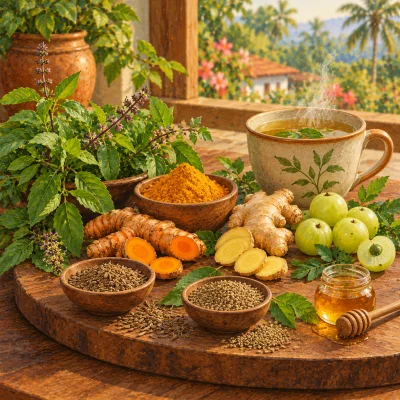
The uses below are the traditional ones given by CCRAS’s home-remedies booklet, the Ayurveda manual for ASHA health workers, and the Ministry of Ayush’s self-care advice. Source They support wellness; they are not cures.
Tulsī · holy basil
Tradition: coughs and colds; with amla, one of the two plants the ASHA manual names for strengthening immunity. Source
Simple use: tulsī leaves with an equal amount of dry ginger powder as a tea, or in the Ayush kadha below.
Haldī, haridrā · turmeric
Tradition: colds, skin and wounds; a daily cooking spice.
Simple use: golden milk, half a teaspoon of turmeric in 150 ml of hot milk, once or twice a day; for a sore throat, a warm-water gargle with a pinch of turmeric and salt. Source
Adrak, śuṇṭhī · fresh and dry ginger
Tradition: indigestion, poor appetite, colds and coughs.
Simple use: a little crushed fresh ginger with a pinch of salt or jaggery before a meal (CCRAS gives 5 g); dry ginger in the kadha.
Āmalakī · amla, Indian gooseberry
Tradition: general nourishment, acidity, hair; CCRAS’s booklet says its regular use provides nutrition.
Simple use: a fresh fruit or two, or 10–20 ml (two to four teaspoons) of fresh juice (CCRAS).
Jīraka · cumin
Tradition: digestion; the Ministry of Ayush recommends it in daily cooking.
Simple use: roasted cumin powder and rock salt in warm water for indigestion.
Ajwain, yavānī · carom seeds
Tradition: wind, abdominal discomfort, poor appetite, a blocked nose.
Simple use: a small pinch with an equal amount of saunf (fennel) in warm water for gas; steam inhalation with ajwain for a blocked nose.
Triphalā · three fruits
What it is: haritakī, bibhītakī and āmalakī, dried and powdered together.
Simple use: as a tooth powder with honey (CCRAS), or water boiled with triphalā as a gargle (Ayush).
Madhu · honey
Tradition: cough and throat; a carrier for herbs.
Simple use: a pinch of clove powder in honey for throat irritation (Ayush); a little honey in lukewarm water if you feel weak before practice (Common Yoga Protocol).
Rules: never heat or cook honey, and never mix honey and ghee in equal amounts (CCRAS).
Yaṣṭimadhu · mulethī, licorice root
Tradition: the throat.
Simple use: water boiled with yaṣṭimadhu as a gargle (Ayush). It is more medicine than spice: take it by mouth only on a practitioner’s advice.
The Ayush kadha
The Ministry of Ayush’s self-care advice puts several of these together: a herbal tea or decoction (kadha) of tulsī, dālcīnī (cinnamon), kālī mirch (black pepper), śuṇṭhī (dry ginger) and munakkā (raisins), once or twice a day, with jaggery or lemon juice to taste. It recommends haldī, jīrā, dhaniyā (coriander) and lahsun (garlic) in cooking, and warm water through the day. Its own disclaimer: this is self-care advice, not a treatment. Source For yoga alongside treatment of specific conditions, see yoga therapy.
Use with care
- Quantity. Kitchen amounts are not medicine amounts. Larger doses or long courses of any herb need a qualified practitioner.
- Pregnancy, breastfeeding and medicines. If you are pregnant or breastfeeding, or take blood thinners, diabetes or blood-pressure medicines, ask your doctor before taking any herb regularly: herbs can interact with medicines.
- Diabetes. Honey, jaggery, raisins and sweet preparations count as sugar; the Ayush advice itself tells people with diabetes to take sugar-free Chyavanprash.
- Allergies. Start small; CCRAS says to stop at once if any discomfort appears.
- Children. CCRAS’s doses are for adults; children take a half or a quarter. Ask first.
- When to see a doctor. If a complaint does not ease in two or three days, CCRAS says to consult a doctor. Herbs complement treatment; they do not replace it.
Quick revision
Test yourself
Which verses of the Bhagavad Gītā describe sāttvic, rājasic and tāmasic food? Give two marks of each.
17.8, sāttvic: increases life, purity, strength, health, happiness and cheer; juicy, gently oily, lasting, pleasing. 17.9, rājasic: pungent, sour, salty, very hot, sharp, dry, burning; brings pain, grief and disease. 17.10, tāmasic: stale, tasteless, putrid, kept overnight, left over, impure.
Define mitāhāra. Where is it defined?
Haṭha Yoga Pradīpikā 1.58 in the Bihar School edition (other editions may number it a verse or so apart): agreeable, gently oily and sweet food, eaten leaving a quarter of the stomach free, taken as an offering to please Śiva.
How should the stomach be divided at a meal?
Half food, a quarter water, a quarter left empty for air (Gheraṇḍa Saṁhitā, chapter 5). Ayurveda gives the same proportion from Suśruta and Vāgbhaṭa.
Name four foods the HYP favours and four it rules out for the yogi.
Favours (1.62–1.63): wheat, rice, barley, milk, ghee, honey, dry ginger, mung, pure water. Rules out (1.59–1.60): very sour, salty and pungent food, alcohol, fish and meat, garlic, oil-cakes, reheated food.
What is brahma muhūrta, and who should not rise then?
The 14th muhūrta of the night, beginning about 96 minutes (two muhūrtas of 48 minutes) before sunrise; about 4:24–5:12 am with a 6 am sunrise. Aṣṭāṅga Hṛdaya, Sūtrasthāna 2.1. Not for a sick person, or when last night’s food is undigested.
List the morning dinacaryā in order.
Water on waking; elimination; teeth and tongue; nasya; gaṇḍūṣa or oil pulling; abhyaṅga; exercise to half capacity; bath; meditation. Then the main meal at midday and a light, early dinner.
Name the six ṛtus in order, with the half of the year each belongs to.
Uttarāyaṇa (ādāna): śiśira, vasanta, grīṣma. Dakṣiṇāyana (visarga): varṣā, śarad, hemanta.
In which seasons does each doṣa accumulate, flare and settle?
Vāta: grīṣma, varṣā, śarad. Pitta: varṣā, śarad, hemanta. Kapha: śiśira, vasanta, grīṣma.
Which elements form each doṣa? How is prakṛti different from vikṛti?
Vāta: space and air. Pitta: fire and water. Kapha: water and earth. Prakṛti is the constitution set at conception; vikṛti is the present imbalance. A BAMS doctor assesses prakṛti.
What goes into the Ministry of Ayush’s kadha?
Tulsī, dālcīnī (cinnamon), kālī mirch (black pepper), śuṇṭhī (dry ginger) and munakkā (raisins), once or twice a day, with jaggery or lemon to taste.
Sources
Where this comes from
- Prescribed books (named, not quoted; explained in my own words): Hatha Yoga Pradipika, with commentary by Swami Muktibodhananda (Bihar School of Yoga / Yoga Publications Trust, Munger), for mitāhāra and the yogi’s diet, and HYP verse numbers here follow this edition; Swami Harshananda, Ṣaḍdarśana: the six systems of Hindu philosophy (Ramakrishna Math), for Sāṅkhya and the three guṇas; B.K.S. Iyengar, Light on Yoga, for its hints on practising on an empty stomach.
- Classical texts: Bhagavad Gītā 6.16–6.17 and 17.8–17.10; Chāndogya Upaniṣad 7.26.2; Haṭha Yoga Pradīpikā 1.58–1.63; Gheraṇḍa Saṁhitā chapter 5; Aṣṭāṅga Hṛdaya, Sūtrasthāna 2.1 and chapters 1–2; Caraka Saṁhitā, Sūtrasthāna chapters 1 and 6 and Vimānasthāna chapter 8.
- Bhagavad Gītā text: IIT Kanpur Gita Supersite (Heritage IITK), BG 17.8, 17.9, 17.10, 6.16, 6.17.
- Kaivalyadhama, Lonavala, Mitāhāra: yogic nutrition and mindful eating (HYP 1.58).
- School of Yoga, Haṭha Yoga Pradīpikā, chapter 1 (verses 1.58–1.63 on diet).
- CBSE, Yoga, Class XII, Unit 2: the concept of āhāra, pathya and apathya, mitāhāra.
- Ministry of Ayush, Common Yoga Protocol (English booklet, hosted by the Ministry of External Affairs): guidelines on food and practice.
- Ministry of Ayush, on Vikaspedia: Ayurveda’s immunity-boosting measures for self-care (kadha, golden milk, nasya, oil pulling); national clinical management protocol based on Ayurveda and Yoga (gargles); Ayurveda: basic concepts.
- CCRAS (Central Council for Research in Ayurvedic Sciences), on Vikaspedia: A healthy daily routine; Concept of vihāra; Concept of āhāra; the guṇas of the mind; Ayurvedic home remedies.
- Manual for ASHAs and ANMs on general wellness and prevention of common ailments through Ayurveda, on Vikaspedia: Concept of healthy living; Ayurveda for the common cold.
- Journal of Ayurveda and Integrated Medical Sciences (JAIMS): brahma muhūrta (AH Sū 2.1, timing); ṛtucaryā (months, ayanas, tastes, doṣa stages); ṛtucaryā and lifestyle disorders (strength and seasonal regimen); prakṛti (doṣas, prakṛti and vikṛti).
- Herald Goa, Southwest monsoon keeps normal date with Goa (6 June 2021; IMD Goa).